
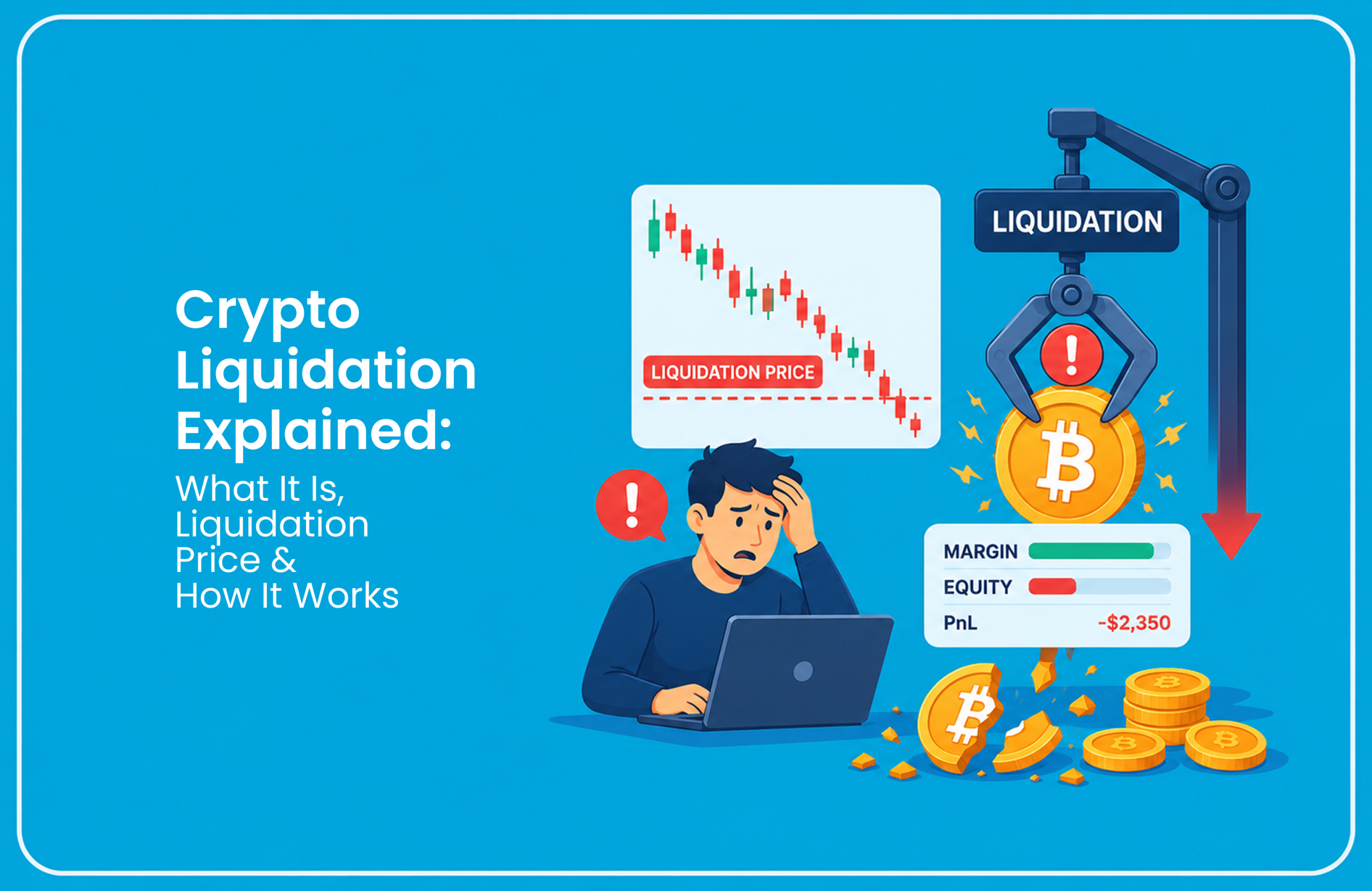
At its core, what is liquidation in cryptocurrency refers to a built-in risk control in leveraged trading. The exchange automatically closes or reduces a position when the margin falls below the necessary threshold. This is designed to limit losses relative to the trader’s collateral, though execution in fast markets can still be affected by slippage.
The liquidation meaning in crypto is associated with leverage and margin mechanics. Even minor price changes can result in liquidation in cases where leverage is high. With that said, crypto liquidations are based on predetermined rules. The risk engine of the platform constantly tracks positions and market prices.
How Does Liquidation Work in Crypto Trading?
Opening a Leveraged Position
Leverage allows traders to take larger positions with limited capital. This is how crypto futures trading works in practice. This is also why crypto liquidations become more frequent, especially in highly leveraged positions.
Margin and Collateral Requirements
Insufficient buffers frequently lead to crypto market liquidations during volatile price movements. The initial margin initiates the position, and the maintenance margin helps keep it active. In many markets, collateral is often kept in stable assets like USDT, although some platforms also support INR-based futures products.
Liquidation Trigger and Execution
The exchange monitors margin levels continuously. When the margin goes below the required limit, the position may be reduced or closed by the system, depending on the platform’s liquidation mechanism. The execution can vary slightly depending on market liquidity.
What is Liquidation Price in Crypto?
Factors That Affect Liquidation Price
To understand what is liquidation price in crypto, focus on a few core variables. Leverage is the most obvious. Higher leverage brings the liquidation level closer to entry. Margin ratio also matters, as it defines the buffer available. Then there is volatility. Sharp price swings can cause positions to liquidate faster than anticipated.
How Liquidation Price Changes
The liquidation price does not stay fixed after entry. It shifts with changes in margin and position size. Adding collateral can move the level further away. Funding costs can also play a role over time. You’ll notice this more in longer trades where available margin gradually reduces.
Types of Crypto Liquidations
Partial Liquidation
Partial liquidation can reduce only a portion of the position instead of closing it fully. On some exchanges, this happens when the margin is close to the threshold and the system cuts exposure to restore balance. It is used to avoid a complete wipeout of capital. But the exact process depends on the platform.
Full Liquidation
Full liquidation occurs when margin requirements are no longer met and the remaining position is closed. There is usually little or no remaining buffer at this stage. Execution still depends on liquidity, and volatile conditions can affect the final exit price.
Long vs Short Liquidation
Direction plays a key role here. Long positions are liquidated when prices fall. Shorts face liquidation when prices rise. In a crypto market liquidation scenario, sharp trends can trigger one side first. Typically, cascades often begin this way before spreading across positions.
Crypto Market Liquidation and Cascades
What is a Liquidation Cascade
A liquidation cascade occurs when multiple positions are forcefully closed in quick succession. These crypto liquidations amplify price movement, pushing prices further in the same direction. That move triggers additional liquidations. It creates a chain reaction where positions are closed rapidly across price levels.
Why Liquidations Increase During Volatility
Volatility reduces margin buffers across leveraged positions. As price swings widen, more trades approach liquidation simultaneously. You’ll notice forced buying or selling adds pressure to the order book, which can accelerate further liquidations.
Common Causes of Liquidation in Crypto
Liquidations usually come from a mix of aggressive exposure and limited margin. When looking at what is liquidation in crypto trading, the same patterns appear repeatedly across different conditions.
- High leverage narrows the gap between entry and liquidation.
- Poor risk management, including weak position sizing
- Sudden volatility pushes prices beyond expected levels.
How to Avoid Liquidation in Crypto Trading
Avoiding liquidation comes down to control, not prediction. Traders frequently overlook how quickly leveraged positions can deteriorate, focusing too much on entries.
- Use strict risk controls, such as margin buffers and stop-loss thresholds.
- Use disciplined position sizing to keep exposure manageable.
- Monitor funding rates and trading costs, as both can gradually reduce available margin over time.
Risks and Limitations of Crypto Liquidation
Liquidation is a protective mechanism, but it has obvious drawbacks. The most immediate impact is capital loss. It frequently occurs faster than expected in leveraged trades. Many traders underestimate how quickly margins can erode when markets move sharply.
Slippage is another factor that is often overlooked. During volatile periods, positions may close at lower prices than expected. Large liquidation events can also intensify short-term price swings and order-book pressure, especially in cascade scenarios. This is often where the question of is crypto trading safe starts to come into sharper focus.
India Context and Platform Considerations
In India, trading outcomes are closely tied to regulation and taxation. Profits from Virtual Digital Assets are taxed at 30 per cent, with applicable surcharge and cess. A 1 per cent TDS may also apply on eligible transfers under the VDA tax framework. This affects capital efficiency, especially for frequent traders.
However, platform choice still matters. Using an FIU-registered exchange can support AML and reporting compliance, but it does not remove a trader’s own tax and reporting obligations. On Shark Exchange, users should also consider trading fees, GST on trading fees, funding rates where applicable, and liquidation-related charges rather than assuming funding is always the main cost. Shark also supports INR deposits through bank transfer channels such as instant bank transfer and IMPS. Leverage availability should be checked on the platform at the time of trading, as product-level limits may vary.
Understanding crypto liquidations is key to trading with leverage. They often decide whether a position holds or is closed under pressure. The outcomes depend heavily on how risk is managed.
FAQ – Crypto Liquidations
1) What is liquidation in cryptocurrency?
Liquidation in cryptocurrency refers to the automatic closing or reduction of a leveraged position when the margin falls below the required level, helping limit losses on the trader’s collateral.
2) What causes liquidation in crypto trading?
Liquidation is usually caused by high leverage, insufficient margin, poor risk management, and sudden market volatility that pushes prices beyond expected levels.
3) What is a liquidation cascade in crypto?
A liquidation cascade happens when multiple positions are forcefully closed in a short time, creating a chain reaction that pushes prices further and triggers more liquidations.
4) What is the difference between partial and full liquidation?
Partial liquidation reduces a portion of a position to restore margin balance, while full liquidation closes the entire position when margin requirements are no longer met.
5) How can traders avoid liquidation in crypto?
Traders can reduce risk by using lower leverage, maintaining sufficient margin buffers, applying stop-loss strategies, and managing position sizes carefully.
6) What are the risks of crypto liquidation?
The main risks include rapid capital loss, slippage during volatile conditions, and increased market volatility caused by large liquidation events.